Which Handheld console to buy in 2026
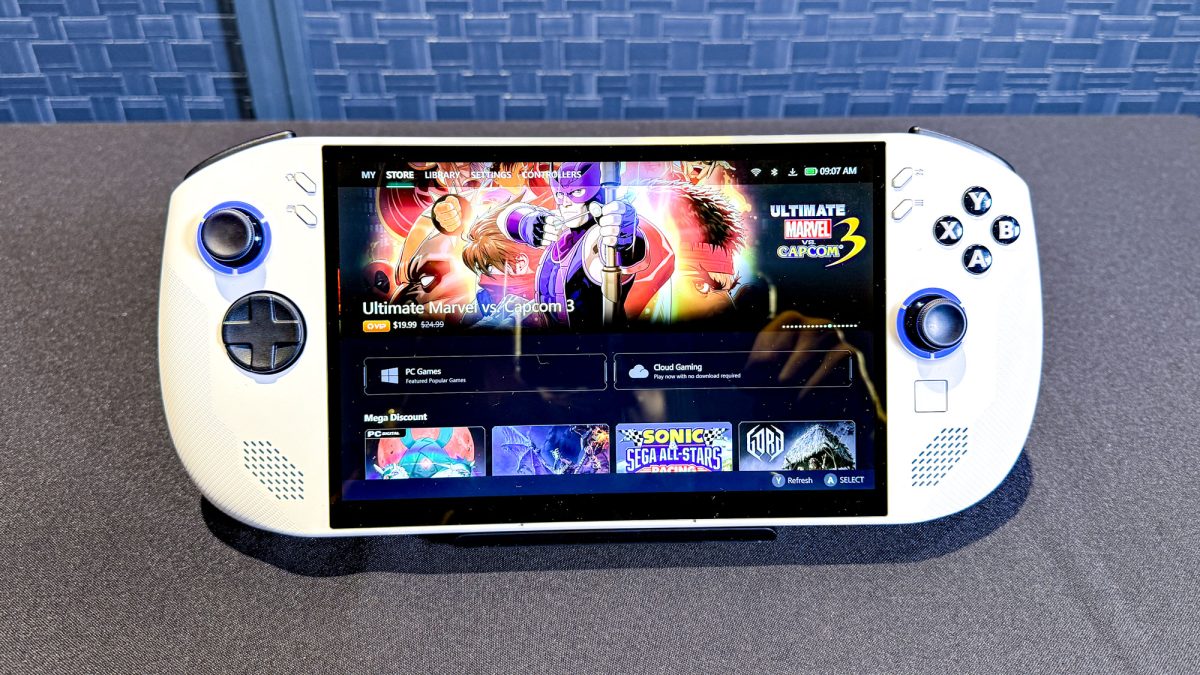
The handheld gaming landscape of 2026 represents a transformative era where the convergence of mobile silicon efficiency and artificial intelligence has effectively bridged the gap between enthusiast-grade desktop performance and portable convenience.
This market maturation occurs against a backdrop of complex global economic shifts, notably the “Rampocalypse” memory shortages that have dictated manufacturing cycles and pricing strategies throughout the fiscal year. As the industry moves away from the first-generation experimentation that characterized the early 2020s, the current cohort of devices—ranging from the ecosystem-driven Nintendo Switch 2 to the high-performance Windows-based ASUS ROG Xbox Ally X and the MSI Claw 8 AI+—demonstrates a sophisticated understanding of thermal management, power delivery, and software optimization.
The following analysis provides an exhaustive review of the primary hardware contenders in 2026, evaluating their technical architecture, market positioning, and economic value within the refurbished and new retail sectors.
The Macro-Economic Context: Geopolitics and the “Rampocalypse”
Before assessing individual hardware units, it is essential to understand the overarching economic pressures influencing the 2026 market. The global handheld industry has been significantly disrupted by severe shortages in RAM and NAND storage, colloquially termed the “Rampocalypse”. These shortages have not merely affected availability but have forced manufacturers to alter their hardware lineups mid-cycle. For instance, Retroid was compelled to discontinue the 12GB version of the Retroid Pocket 6 in early 2026 because the procurement costs for LPDDR5X modules exceeded sustainable retail margins.
This scarcity has also impacted the development of next-generation hardware. Valve’s anticipated Steam Deck 2, initially rumored for a 2026 or 2027 release, has reportedly been pushed back toward a 2028 or 2029 window as the company waits for component prices to stabilize and for a “meaningful leap” in performance-per-watt that would justify a successor. Consequently, 2026 has become a year of refinement and “pro” iterations rather than foundational shifts in X86 architecture.
ASUS ROG Xbox Ally and Ally X: The Microsoft Strategic Pivot
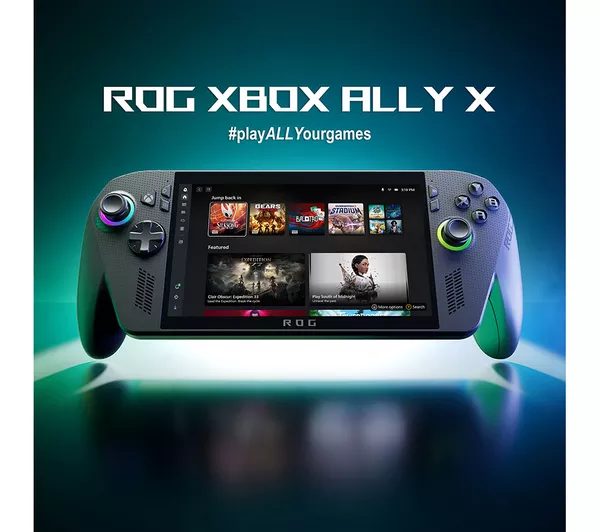
The ASUS ROG Xbox Ally series represents a significant branding and technical evolution of the original ROG Ally. By 2026, the partnership between ASUS and Microsoft has matured, resulting in a device that functions less like a shrunken Windows laptop and more like a portable extension of the Xbox ecosystem.
Technical Architecture and Processing Power
The 2026 lineup is bifurcated into the standard ROG Xbox Ally and the enthusiast-grade ROG Xbox Ally X. The standard model utilizes the AMD Ryzen Z2 A processor, a 4-core, 8-thread chip utilizing the Zen 2 architecture and RDNA 2 graphics. This configuration is designed for maximum efficiency at low wattages, primarily targeting the “indie” and mid-tier gaming market where the 60Wh battery can provide extended play sessions.
In contrast, the ROG Xbox Ally X is powered by the AMD Ryzen AI Z2 Extreme, a powerhouse utilizing RDNA 3.5 graphics and a dedicated Neural Processing Unit (NPU) capable of up to 50 TOPS. This NPU is not a mere marketing gimmick; it facilitates on-device AI upscaling and power management, allowing the system to dynamically adjust clock speeds based on real-time game telemetry, which preserves battery life without sacrificing frame rates in demanding AAA titles.
| ROG Xbox Ally Series Specifications | ROG Xbox Ally (2025/26) | ROG Xbox Ally X (2025/26) |
| Processor | AMD Ryzen Z2 A | AMD Ryzen AI Z2 Extreme |
| GPU Architecture | RDNA 2 (8 Cores) | RDNA 3.5 |
| Memory | 16GB LPDDR5X-6400 | 24GB LPDDR5X-8000 |
| Storage | 512GB M.2 2280 | 1TB M.2 2280 |
| Display | 7″ 1080p IPS, 120Hz, VRR | 7″ 1080p IPS, 120Hz, VRR |
| Battery Capacity | 60Wh | 80Wh |
| Weight | 670g | 715g |
| Operating System | Windows 11 (Xbox UI) | Windows 11 (Xbox UI) |
Thermal Engineering and Ergonomics
The Ally X features the “Zero Gravity” thermal system, an inverted fan design that maintains cooling efficiency regardless of the device’s orientation. This is critical for handheld use, where users frequently shift positions. The physical chassis has also been refined, with contoured grips inspired by the Xbox Wireless Controller, providing all-day comfort and housing impulse triggers that provide haptic feedback similar to a standard console controller.
Market Positioning and Pricing
The ROG Xbox Ally X is positioned as the premier Windows handheld for the Xbox enthusiast. In the UK market, as of April 2026, new units retail for approximately £799 to £899, depending on the retailer. However, the refurbished market is robust. CEX offers Grade A “Mint” condition ROG Xbox Ally X units for £880, while Grade B units can be found for as low as £610. For the more budget-conscious, the standard ROG Ally (Z1 Extreme version) has dropped significantly in price, with Grade A units available for £390.
This handheld is good for you if…
You are deeply integrated into the Xbox ecosystem and require a device that provides a seamless “pick up and play” experience with your Game Pass library. It is ideal for users who prioritize software stability and ergonomic comfort over raw screen size.
MSI Claw 8 AI+: The Intel Lunar Lake Contender
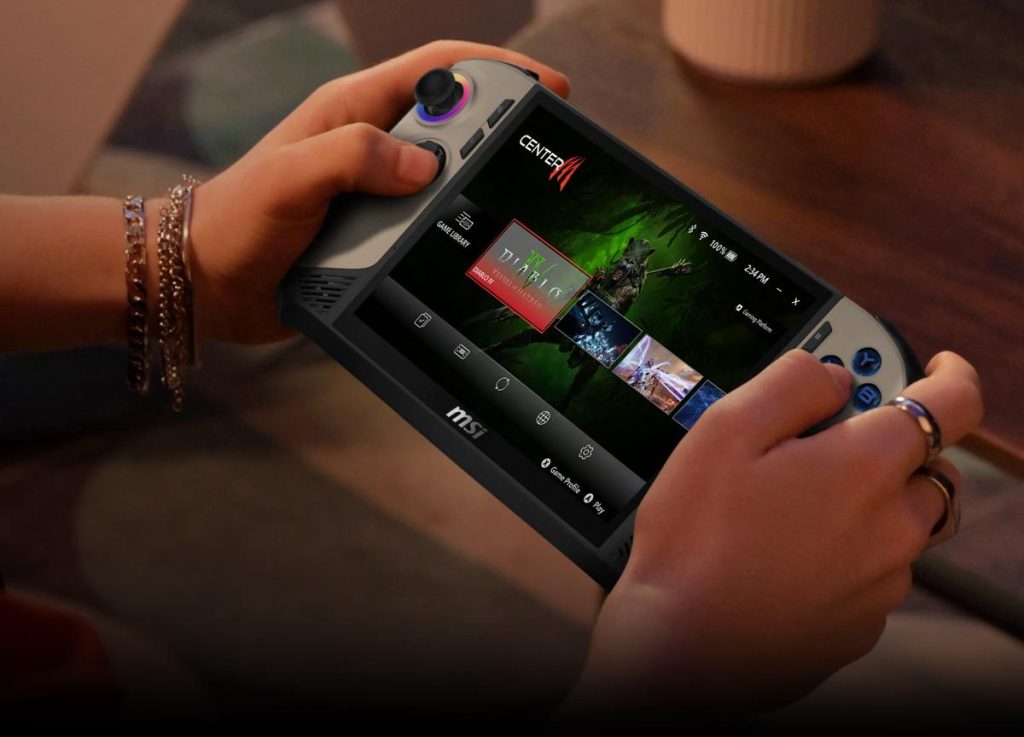
After a difficult launch with the original Claw, MSI’s 2026 offering, the Claw 8 AI+, has successfully leveraged Intel’s “Lunar Lake” architecture to challenge AMD’s dominance in the handheld space.
The Lunar Lake Advantage
The Core Ultra 7 258V processor within the Claw 8 AI+ represents a paradigm shift for Intel in the mobile segment. By integrating the memory directly onto the package (32GB LPDDR5X-8533), Intel has significantly reduced latency and power consumption. The Intel Arc 140V GPU has proven to be a formidable competitor to AMD’s RDNA 3.5, particularly in titles that support Intel’s XeSS 3.0 upscaling technology.
Benchmarks in late 2025 and early 2026 indicate that the Claw 8 AI+ can run demanding titles like Space Marine II and Horizon Forbidden West at 30-40fps at native 1200p resolution, which is a significant feat for an integrated GPU. The inclusion of a massive 80Wh battery allows for over two hours of gameplay in intensive titles like Elden Ring, nearly matching the battery longevity of the Steam Deck OLED.
Hardware Features and I/O
MSI has leaned into the “pro” aesthetic with the Claw 8 AI+. The device features two Thunderbolt 4 ports, a rarity in the handheld market, allowing for extreme expandability including dual 4K monitor support and high-speed external storage. The 8-inch IPS display offers a 120Hz refresh rate and supports Variable Refresh Rate (VRR), ensuring smooth motion even when frame rates fluctuate.
| MSI Claw 8 AI+ (A2VM) | Details |
| Processor | Intel Core Ultra 7 258V (Lunar Lake) |
| Graphics | Intel Arc 140V |
| Memory | 32GB LPDDR5X-8533 (On-Package) |
| Display | 8″ 1920×1200 IPS, 120Hz, VRR |
| Battery | 80Wh with Fast Charge |
| Ports | 2x Thunderbolt 4, microSD |
| Weight | 795g |
The Cost of Innovation
The MSI Claw 8 AI+ is one of the more expensive options on the market, retailing for approximately £899 or $900. The refurbished market in the UK provides some relief; “Curry’s Clearance” on eBay and other secondary sellers have listed 2TB versions of the device for around £906, while lightly used 1TB models have appeared for as low as £750.
This handheld is good for you if…
You are a power user who values I/O expandability and intends to use your handheld as a “single-device” solution for both gaming and docked desktop tasks. Its heavy weight makes it less suitable for long commutes but excellent for “stationary” portable play.
Steam Deck OLED: The Reliable Standard
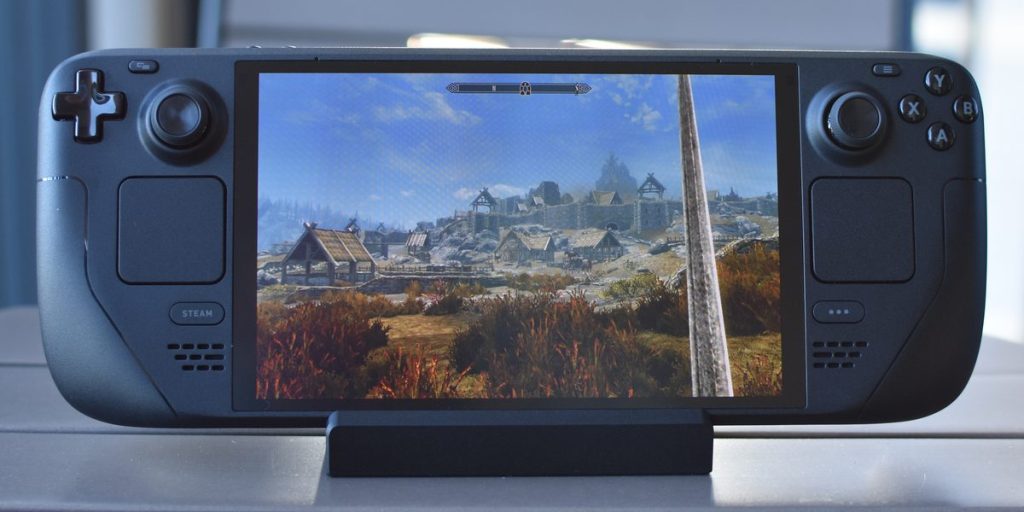
As of April 2026, the Steam Deck OLED has transitioned into the “reliable veteran” of the handheld world. While it no longer possesses the highest raw performance numbers, its software maturity and the efficiency of SteamOS make it the benchmark against which all other devices are measured.
The SteamOS Advantage
The primary draw of the Steam Deck remains its operating system. Unlike the Windows-based competitors, which often struggle with UI scaling and background processes, SteamOS provides a console-like interface that manages system resources with surgical precision. The 7.4-inch OLED display, while limited to 800p resolution, offers 90Hz refresh rates and incredible HDR support, reaching peak brightness levels of up to 1000 nits in HDR content.
The Refurbished Market Strategy
Valve has aggressively utilized its certified refurbished program to maintain market share against more powerful competitors. In April 2026, a certified refurbished 512GB OLED model is priced as low as £389 ($439), making it the most affordable entry point into high-quality handheld PC gaming.
| Steam Deck OLED Market Pricing (April 2026) | New MSRP | Certified Refurbished | Used (CEX/Marketplace) |
| 512GB OLED | £479 / $549 | £389 / $439 | £410 (Grade B) |
| 1TB OLED | £569 / $649 | £459 / $519 | £485 (Grade B) |
The Scarcity Factor
The 2026 market has seen unexpected price volatility for the Steam Deck OLED due to regional stock shortages. In parts of Asia, prices increased in March 2026 by nearly $100 due to logistics pressures. In the UK and US, while MSRP has remained stable, the scarcity of new units has driven used prices on platforms like Facebook Marketplace to $700 or more in some instances.
This handheld is good for you if…
You want a frictionless gaming experience and have a large library of Steam titles. It is the best choice for users who value battery life, software stability, and display contrast over raw resolution and high-end Windows compatibility.
Retroid Pocket 5 & 6: The Emulation Powerhouses
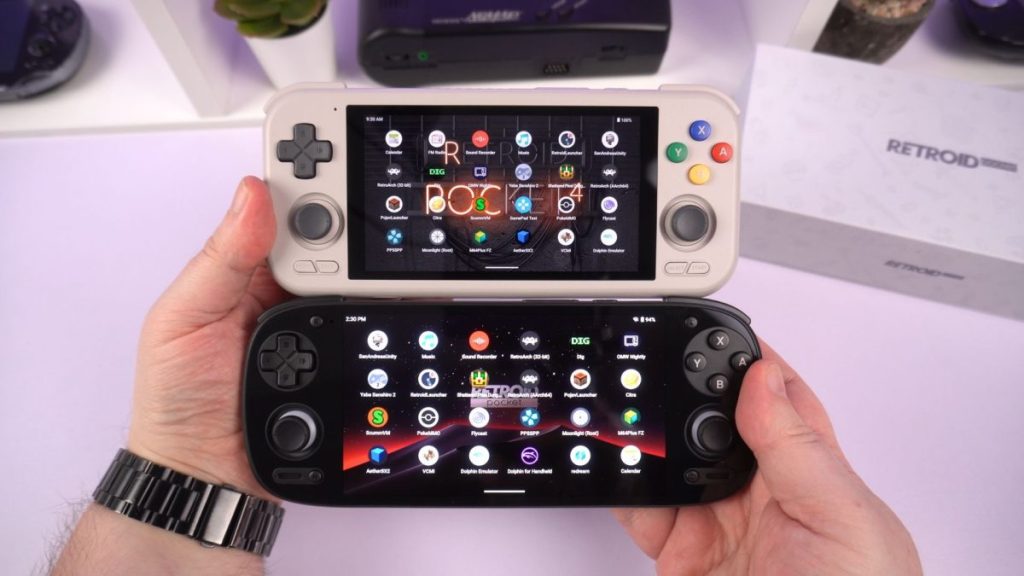
For enthusiasts focusing on retro emulation and cloud gaming, the Retroid Pocket series remains the dominant choice in 2026. The 2024/2025 release of the Pocket 5 and the early 2026 release of the Pocket 6 have pushed Android-based handhelds into the mainstream.
Retroid Pocket 5: The OLED Retro King
The Retroid Pocket 5 is celebrated for its 5.5-inch 1080p AMOLED display, which provides perfect blacks for classic titles. Powered by a Snapdragon 865 chipset, it is a specialist device for PlayStation 2 and GameCube emulation, handling almost the entire library of those systems at upscaled resolutions.
Retroid Pocket 6: Flagship Power
The Retroid Pocket 6 represents a significant performance jump, utilizing the Snapdragon 8 Gen 2—the same silicon found in 2023/2024 flagship smartphones. This allows the Pocket 6 to venture into stable Nintendo Switch emulation and high-end Android gaming. However, the device was hit hardest by the 2026 RAM crisis, leading to the discontinuation of the 12GB RAM model just months after launch.
| Retroid Comparison | Retroid Pocket 5 | Retroid Pocket 6 |
| Chipset | Snapdragon 865 | Snapdragon 8 Gen 2 |
| Memory | 8GB LPDDR4X | 8GB/12GB LPDDR5X (12GB Discontinued) |
| Display | 5.5″ 1080p AMOLED (60Hz) | 5.5″ 1080p AMOLED (120Hz) |
| Battery | 5000mAh | 6000mAh |
| Primary Use | PS2 / GameCube / PSP | PS2 / GameCube / Switch / Android |
| Price (New) | ~$199 – $219 | ~$244 – $259 |
Import and Convenience Taxes
For UK buyers, purchasing a Retroid device often involves navigating the “transatlantic tech gap.” While the official store sells the Pocket 6 for roughly $244, shipping and import VAT can bring the total cost closer to £240-£260. Some users utilize freight forwarders to bypass regional shipping blocks and access US-only stock batches.
This handheld is good for you if…
You are a retro gaming enthusiast who wants a pocketable device for emulating everything from the NES up to the PlayStation 2. It is also an excellent secondary device for cloud gaming via Xbox Cloud Gaming or GeForce NOW.
Lenovo Legion Go 2: The High-End Hybrid
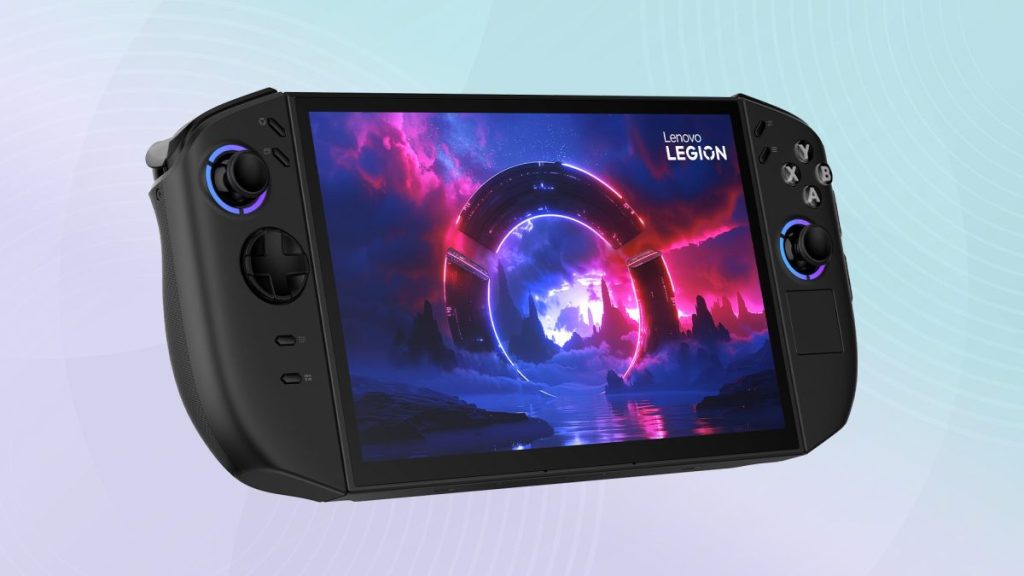
The Lenovo Legion Go 2 remains the “largest” of the major handhelds, doubling down on the hybrid tablet/handheld concept that defined its predecessor.
Display Supremacy
The centerpiece of the Legion Go 2 is its 8.8-inch 144Hz OLED display. In 2026, this remains the largest and most vibrant screen on any handheld PC, supporting a 100% DCI-P3 color gamut and HDR 1000 True Black certification. The resolution has been refined to 1200p, which many reviewers argue is the “sweet spot” for this screen size, providing sharpness without the excessive performance tax of the original’s 1600p panel.
Performance and Thermal Management
The device utilizes the Ryzen Z2 Extreme and offers configurations with up to 32GB of LPDDR5X-8000 RAM. To manage the heat generated by these components, Lenovo redesigned the “ColdFront” cooling system, increasing fan blade size and heat pipe surface area to improve airflow by 45%. The detachable “Truestrike” controllers have also been ergonomically refined, featuring a more intuitive button layout and the continuation of the “FPS mode” which allows the right controller to function as a mouse.
The Luxury Tax
The Legion Go 2 is a premium investment. The starting price for a 16GB/1TB model is $1,099 (£950 used), while the top-tier 32GB/2TB variant can cost as much as $1,479. Rumors in April 2026 even suggested a limited edition model could skyrocket to $2,000 due to the ongoing component crisis.
| Lenovo Legion Go 2 (8ASP2) | Starting Model | Enthusiast Model |
| Price (New) | $1,099 | $1,349 – $1,479 |
| Processor | AMD Ryzen Z2 | AMD Ryzen Z2 Extreme |
| Memory | 16GB LPDDR5X | 32GB LPDDR5X |
| Storage | 1TB SSD | 2TB SSD |
| Weight | 921g (with controllers) | 921g (with controllers) |
| CEX Price (Grade B) | ~£820 (512GB) | ~£1,100 (1TB Z2E) |
This handheld is good for you if…
You want the most immersive visual experience possible and frequently use your device in “tabletop” mode. It is the best choice for gamers who play a mix of shooters (FPS mode) and cinematic AAA titles where the large OLED screen can truly shine.
Nintendo Switch 2: The Ecosystem Juggernaut
Released on June 5, 2025, the Nintendo Switch 2 has dominated the 2026 market through a combination of exclusive content and meaningful hardware innovation.
The Ampere Architecture and DLSS
The Switch 2 utilizes a custom NVIDIA Tegra T239 processor. While its raw TFLOPS (1.71 undocked, 3.07 docked) may seem lower than Windows handhelds, its support for NVIDIA’s DLSS upscaling allows it to punch significantly above its weight class. When docked, the device can output 4K resolution via HDMI 2.1, providing a visual parity with modern home consoles that the original Switch lacked.
Innovation in Input: Joy-Con 2
The new magnetic Joy-Con 2 system has removed the failure-prone plastic rails of the original model. These controllers now feature optical mouse sensors on their sides, allowing them to be used as precision pointers on surfaces like a table or a lap—a feature already being utilized in titles like Civilization VII and Metroid Prime 4: Beyond.
The “GameChat” Revolution
Nintendo’s new “GameChat” system, accessed via a dedicated “C button,” provides a native, low-latency party voice channel. The console features a built-in microphone with advanced noise-cancellation that allows players to talk clearly even when the console is docked across the room.
| Nintendo Switch 2 (Standard Edition) | Specifications |
| Release Price | £395.99 / $449.99 |
| Display | 7.9″ 1080p LCD, 120Hz, VRR |
| Internal Storage | 256GB UFS 3.1 |
| Docked Output | 4K 60Hz with HDR10 |
| CEX Price (Used) | £360 (Unboxed) – £390 (Boxed) |
Market Performance and Games
In its first four days, the Switch 2 sold 3.5 million units, and by April 2026, it had established a massive library including Mario Kart World, Pokemon Legends: Z-A, and Donkey Kong Bananza. The device also supports “Switch 2 Enhanced” versions of older titles like Breath of the Wild and Tears of the Kingdom, which run at higher resolutions and frame rates.
This handheld is good for you if…
You value Nintendo’s first-party exclusives and a simple, frictionless gaming experience. It is the best choice for families and local multiplayer enthusiasts, as well as those who want a device that transitions seamlessly between handheld and 4K TV play.
AI Upscaling: The Software Battlefield of 2026
The performance of these handhelds in 2026 is inextricably linked to their software upscaling suites. The battle between NVIDIA DLSS 4, AMD FSR 4, and Intel XeSS 3.0 has defined the year’s benchmarks.
- DLSS 4 (Nintendo Switch 2): Utilizing a Transformer-based neural model, DLSS 4 can generate up to four additional frames for every natively rendered frame. This “Multi-Frame Generation” allows the Switch 2 to reach 120fps in titles that would otherwise struggle at 30fps.
- FSR 4 (ASUS/Lenovo/Steam Deck): AMD’s 2026 update to FSR has finally integrated machine-learning models similar to DLSS. FSR 4 Quality mode is now considered comparable to DLSS Quality mode in most titles, effectively closing a three-generation gap in image stability.
- XeSS 3.0 (MSI): Intel’s XeSS 3.0 is highly optimized for the XMX cores in the Lunar Lake chips. In 2026, it is often preferred over FSR 4 on Intel hardware because it offers superior temporal stability and less “ghosting” on moving objects.
| Upscaling Comparison | Image Quality | Device Compatibility | AI Acceleration |
| NVIDIA DLSS 4 | Gold Standard | NVIDIA GPU Only | Tensor Cores |
| AMD FSR 4 | Excellent | Universal | ML-Accelerated (Z2) |
| Intel XeSS 3.0 | High | Universal (Opt for Arc) | XMX Cores |
Comprehensive Price Comparison Matrix (UK Market April 2026)
The following table synthesizes the retail and pre-owned pricing for the most relevant models as of April 2026.
| Handheld Device | New MSRP | CEX Grade A (Mint) | CEX Grade B (Good) | Refurbished / Marketplace |
| ROG Xbox Ally X (1TB) | £799.00 | £880.00 | £610.00 | £699.00 (Refurb) |
| ROG Xbox Ally (512GB) | £499.00 | £390.00 | £310.00 | £350.00 |
| MSI Claw 8 AI+ (1TB) | £899.00 | £840.00 | £780.00 | £750.00 |
| Steam Deck OLED (512GB) | £479.00 | £430.00 | £410.00 | £389.00 (Official) |
| Steam Deck OLED (1TB) | £569.00 | £510.00 | £485.00 | £459.00 (Official) |
| Legion Go 2 (Z2E/1TB) | £1,099.00 | £1,200.00 | £1,100.00 | £950.00 |
| Legion Go 2 (Z2/512GB) | £899.00 | £870.00 | £820.00 | £780.00 |
| Nintendo Switch 2 (256GB) | £395.99 | £390.00 | £360.00 | N/A |
| Retroid Pocket 6 (8GB) | ~$244.00 | £230.00 (Used) | £210.00 (Used) | ~$229 (Pre-order) |
Strategic Conclusion: Identifying Your 2026 Handheld
The 2026 handheld market is defined not by a single “best” device, but by highly specialized hardware suited to distinct consumer profiles. The ASUS ROG Xbox Ally X stands as the most polished and ergonomic option for the mainstream PC gamer, offering the best balance of battery life and performance. For the high-end enthusiast who demands visual fidelity and screen real estate, the Lenovo Legion Go 2 remains unrivaled, albeit at a significant cost and weight penalty.
The MSI Claw 8 AI+ has successfully carved a niche for power users who require the I/O flexibility of Thunderbolt 4 and the unique efficiency of Intel’s Lunar Lake architecture. Meanwhile, the Steam Deck OLED continues to offer the most reliable and affordable entry point through Valve’s refurbished program, even as its hardware begins to age.
In the non-X86 space, the Nintendo Switch 2 is a required acquisition for those seeking Nintendo’s peerless first-party library and a modern 4K docked experience. For the burgeoning retro emulation community, the Retroid Pocket 6 provides flagship-level Android performance in a pocketable form factor, representing the pinnacle of price-to-performance ratio in 2026.
As the industry navigates the remaining challenges of the 2026 component crisis, consumers should prioritize devices with 24GB or more of RAM (such as the Ally X and Claw 8 AI+) to ensure longevity as software demands continue to escalate. The era of the “pocketable PC” has truly arrived, offering a diversity of choice that caters to every conceivable gaming need and budget.
